My libraryROEN
Arka Books · Illustrated edition · October 2026

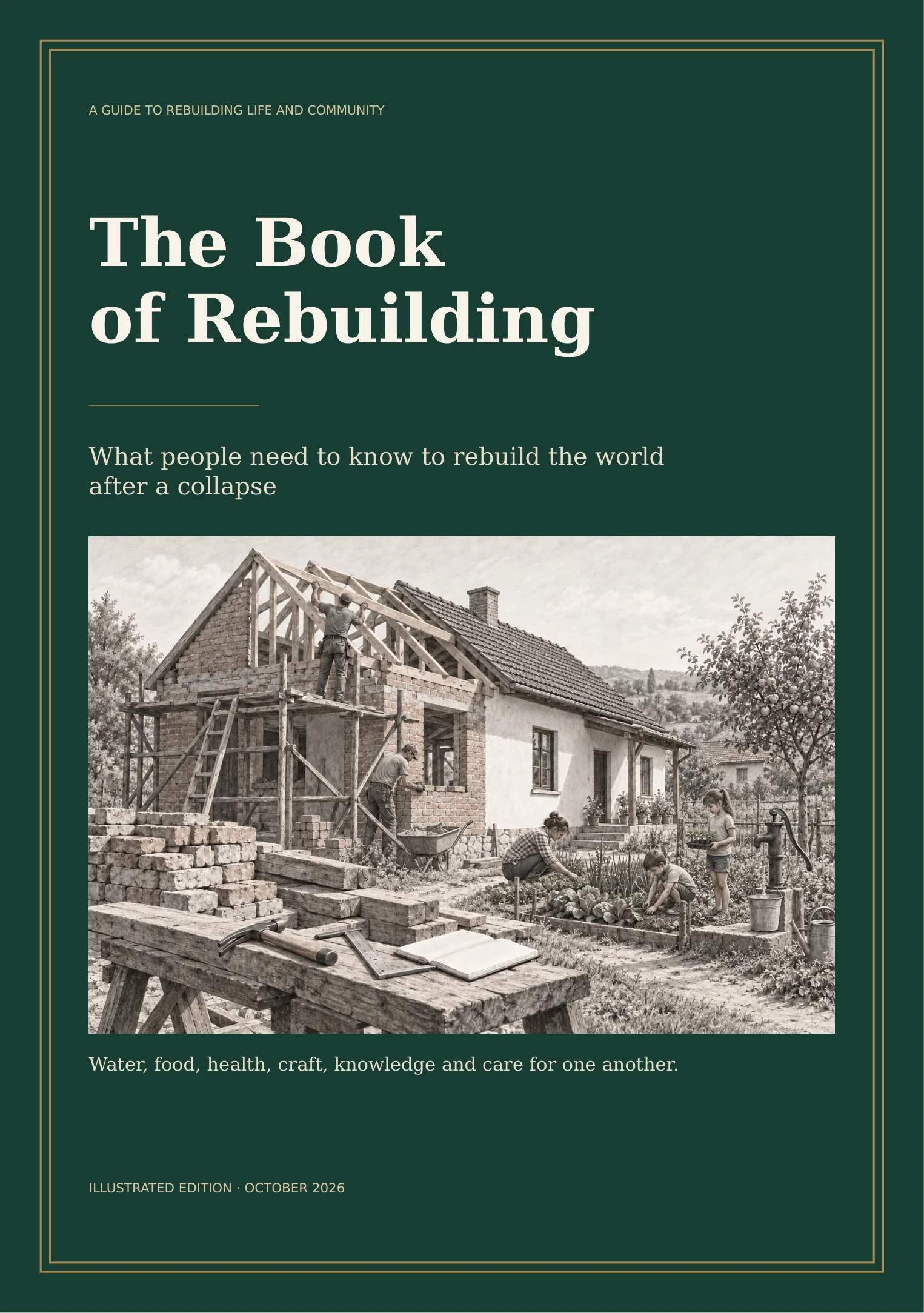
The Book of Rebuilding

What people need to know to rebuild the world after a collapse

Water, food, health, craft, knowledge and care for people, gathered in one book, in the order in which they can be rebuilt. It took humankind thousands of years to get from fire to electric light. Whoever knows what to look for can skip centuries.

PDF in English · full edition + phone version · instant delivery by email

831pages

↻ Drag the book to turn it · tap to open it

12parts
108chapters
831pages
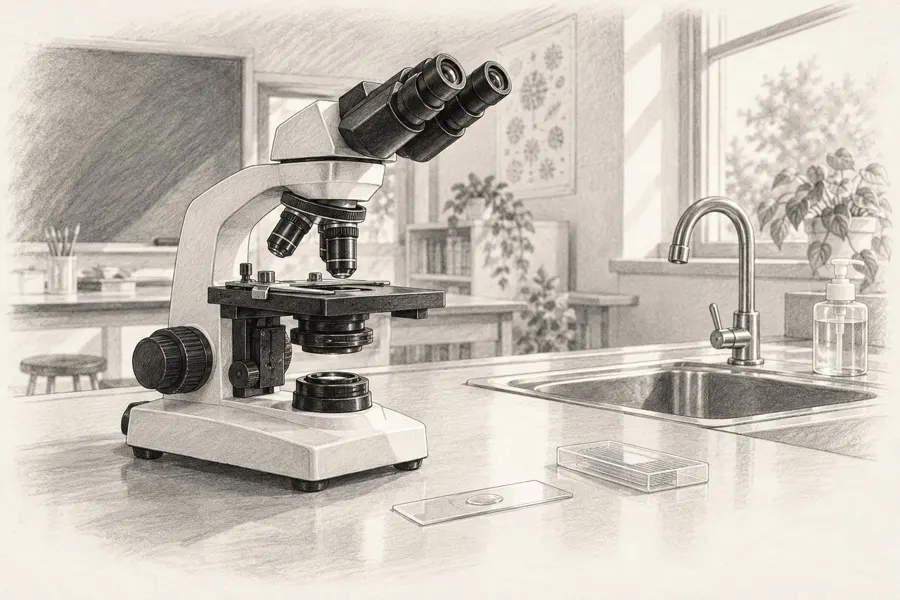
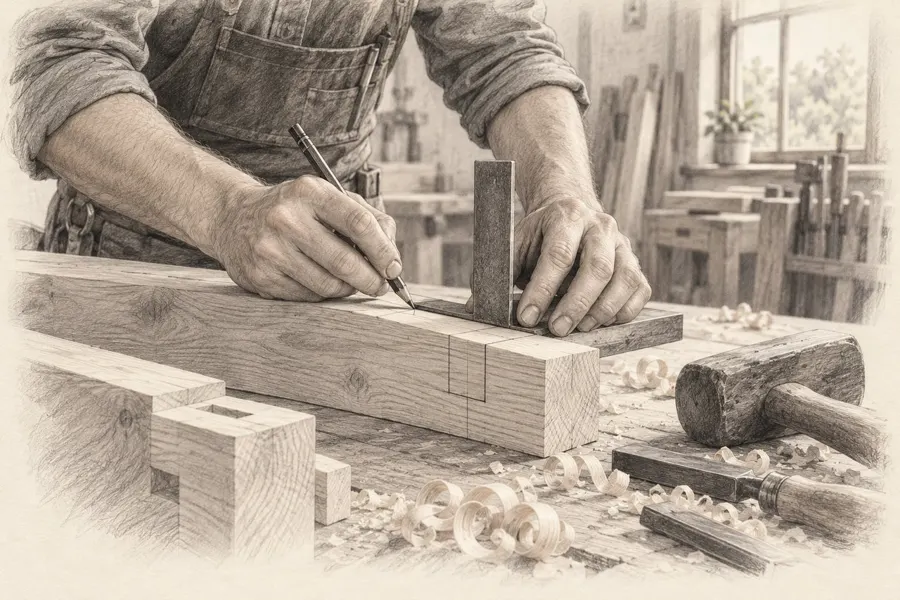
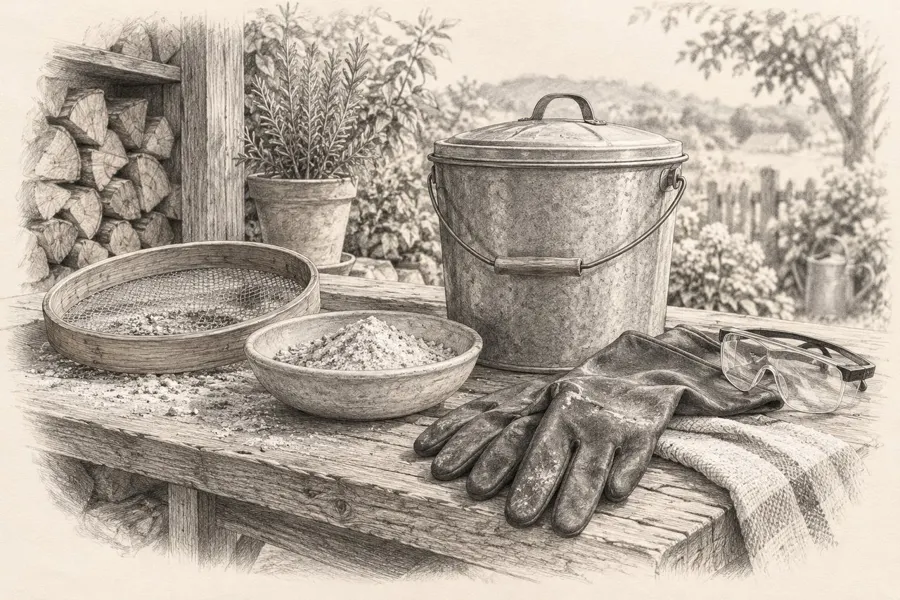
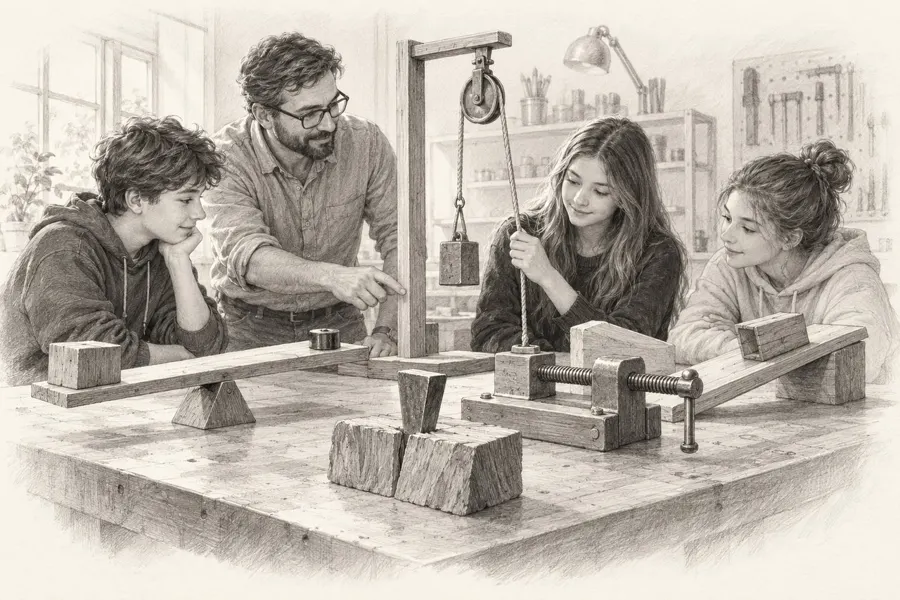
108graphite illustrations
2files: full + phone

Why this book

Things were not hard. People did not know what to look for. This book gathers the shortcuts: that disease comes from germs, that burnt lime binds stone, that a coil turning beside a magnet makes current.

Every chapter tells you the principle (why it works, so you can improvise), what to salvage from the ruins (in the first years the old world is the richest mine), the steps, the dangers and how to check it worked.

You don’t have to do everything. Choose what is needed now and teach others. And while the world is still whole, practise: a book you have read is not yet a trade.

■ Anyone · what everyone needs to know■ The Craftsman · how to carry a craft further■ The Community · how to organise people and work

The order of rebuilding

What comes first, what comes next

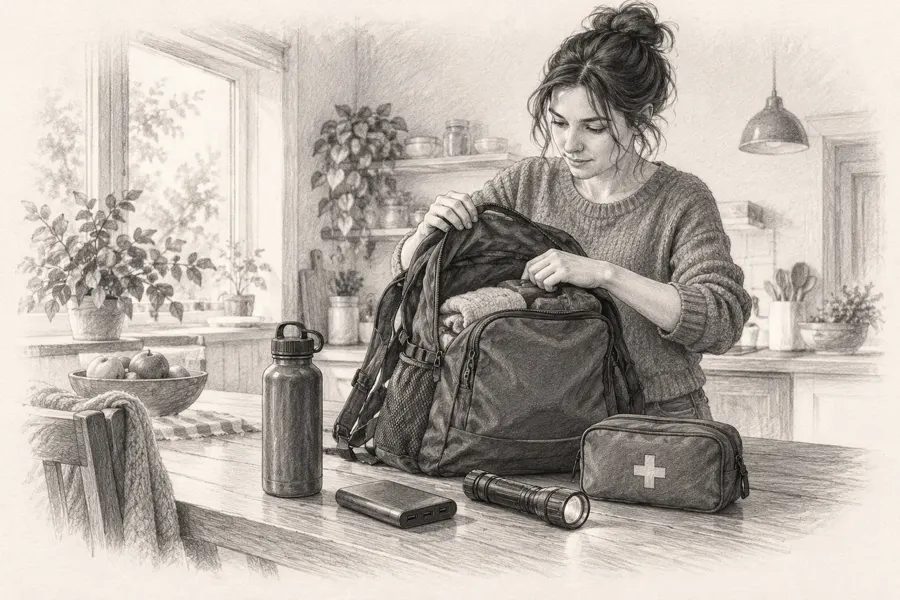
The first daysStay aliveSafe water, shelter, warmth, a latrine away from water, the group.
The first monthsLose nothingSeeds, tools, books, salt and metals from the ruins; food, an infirmary, simple rules.
The first yearHave foodGardens and fields, saved seed, preserved food, soap, lime, repaired tools.
Years 2–5Work less hardPlough and animals, mill, forge, brick, school, records, 12 V from salvaged parts.
After thatTie the world back togetherWaterwheel, iron from ore, paper, printing, roads and markets with other communities.

Full contents

12 parts, 108 chapters

Every chapter opens with a graphite illustration and one sentence that carries its idea. Open any part to see all its chapters.

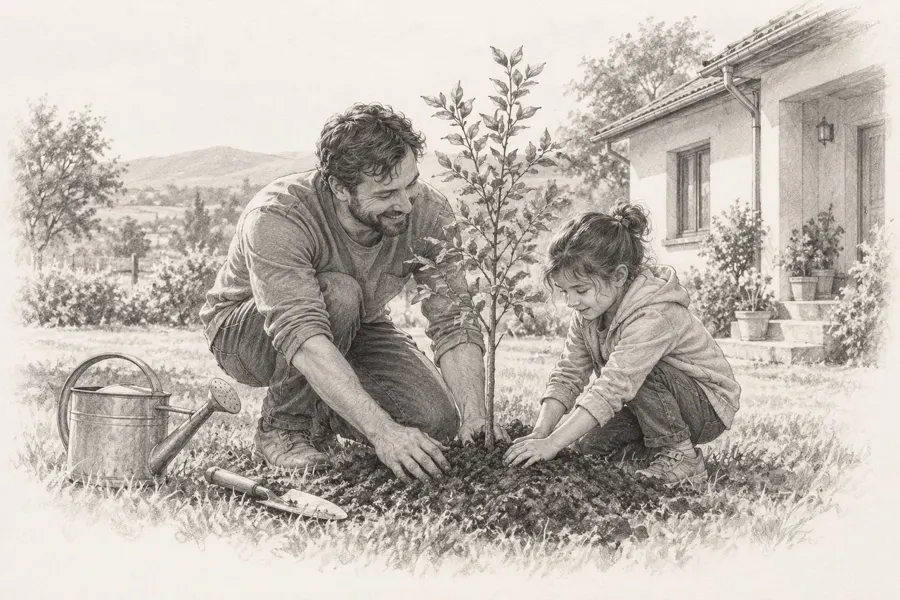
Graphite illustration from part I: The First Weeks
Part I · 9 chapters · 66 pages

The First Weeks

The order in which you do things in the first three days decides whether you see a fourth.

See the chapters
  1. 1The First 72 Hours: What to Do FirstThe order in which you do things in the first three days decides whether you see a fourth.
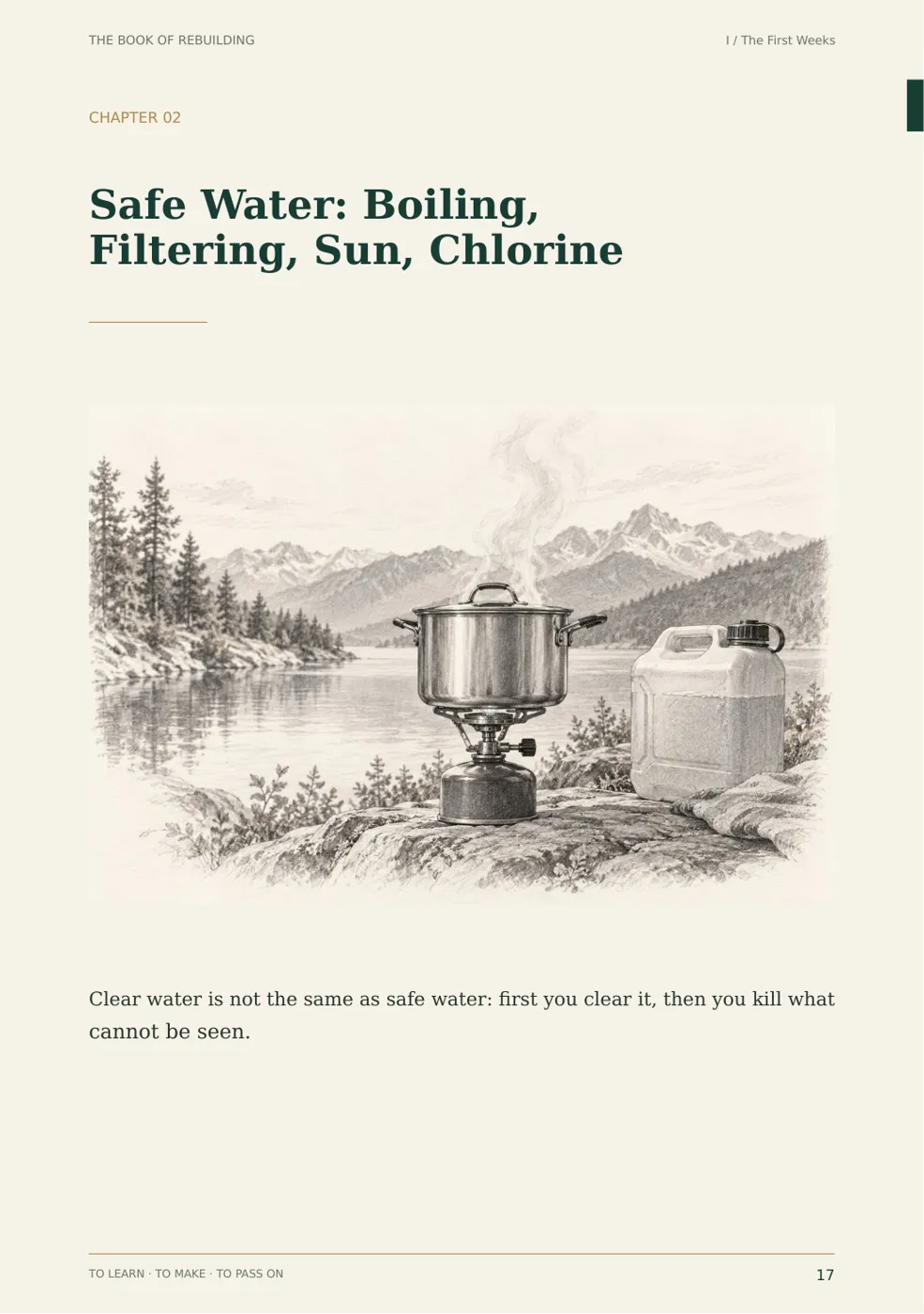
  2. 2Safe Water: Boiling, Filtering, Sun, ChlorineClear water is not the same as safe water: first you clear it, then you kill what cannot be seen.
  3. 3Shelter and WarmthYou do not heat the world, only the air around you: trap it, keep it dry and do not let it escape.
  4. 4Fire Without MatchesA spark does not light a log; it lights the tinder, the tinder lights the kindling, and the kindling lights the wood.
  5. 5Hygiene That Saves Lives: the Latrine and HandwashingA well-placed pit and a bar of soap have saved more people than all the hospitals in the world.
  6. 6What to Salvage from the Ruins FirstSeeds, tools, books, medicines, salt, metals, glass: what spoils quickly is saved first; what lasts can wait.
  7. 7Food in the First Months: Stores, Rationing, Safe ForagingCount food in days, not kilograms, share it fairly and put nothing in your mouth that you do not know for certain.
  8. 8The Survival Library: Which Books to SaveThe right book, kept dry, is a craftsman who never dies and who teaches you in a few days what humanity learned over centuries.
  9. 9Who You Start With: the GroupNo one rebuilds the world alone: a small, fair, united group is worth more than any full cellar.
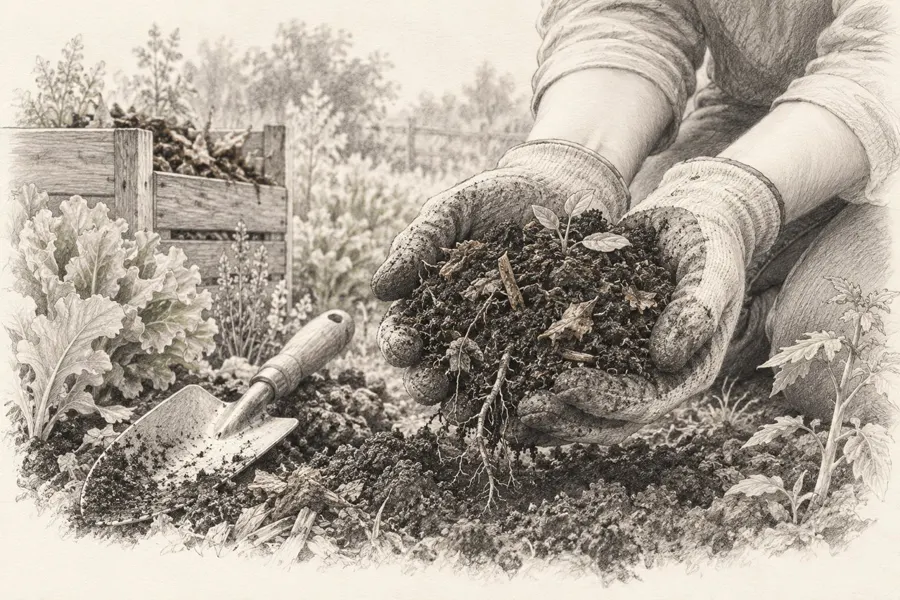
Graphite illustration from part II: Food for the Long Term
Part II · 9 chapters · 68 pages

Food for the Long Term

What the plant takes from the soil, how you give it back, and why nitrogen is the key: compost, manure, urine, ash and legumes.

See the chapters
  1. 10Soil and FertilityWhat the plant takes from the soil, how you give it back, and why nitrogen is the key: compost, manure, urine, ash and legumes.
  2. 11Seeds: Heirloom Varieties, Open Pollination, SavingSeed is the one part of farming you cannot remake from nothing: lose it, and you have lost thousands of years of human selection.
  3. 12Crops That Feed Many: Wheat, Maize, Potatoes, BeansFour plants the Romanian village relied on: how to grow them, how to store them and what diseases of poverty they bring if eaten badly.
  4. 13Crop Rotation and Field SystemsThe same plant in the same place year after year impoverishes the soil and fattens the pests; just by changing the order, you gain harvest with no extra work.
  5. 14The Plough and Animal TractionA pair of oxen and a good plough do in a day the work of dozens of people with hoes — if you know how to adjust, harness and care for them.
  6. 15Farm Animals: What They GiveAnimals turn grass, straw and scraps — which people cannot eat — into power, manure, milk, wool, eggs and meat.
  7. 16Preserving Food Without a FridgeThe harvest comes once a year, hunger every day: drying, salt, sourness, smoke and the cellar keep food from autumn until the following summer.
  8. 17The Mill and GrindingWheat does not become bread until it becomes flour: from the hand quern to the water-driven millstone.
  9. 18How Many People a Hectare Feeds: Food Arithmetic for a CommunityPencil in hand, before spring: how much food you need, how much the land gives and how much you set aside for bad years.
Graphite illustration from part III: Health
Part III · 9 chapters · 71 pages

Health

What you cannot see can kill you — and you stop it with boiled water, soap and separation.

See the chapters
  1. 19Germs: the Discovery That Saved the Most LivesWhat you cannot see can kill you — and you stop it with boiled water, soap and separation.
  2. 20Soap, Water and the Latrine: Village HealthThree simple things that save more people than any doctor.
  3. 21Wounds and BurnsStop the bleeding, wash well, cover cleanly and watch for signs of infection.
  4. 22Diarrhoea and Oral Rehydration SolutionDiarrhoea kills by drying out the body; a litre of water, a little sugar and a little salt stop it from killing.
  5. 23Fever, Infections and QuarantineFever is the body's fight; separating the sick is the village's fight.
  6. 24Childbirth and the NewbornMost births go well on their own; the person beside the mother brings cleanliness, warmth, patience and an eye for danger.
  7. 25Food and Deficiency DiseasesA full belly is not enough: the body also needs a few small things that it cannot make by itself.
  8. 26Medicinal Plants with Proven Effects, and Their LimitsA few plants help with minor ailments; none replaces clean water, rehydration solution or a skilled person.
  9. 27The Village InfirmaryA clean, bright, airy place, with trained people, boiled water, separation and records.
Graphite illustration from part IV: Materials
Part IV · 9 chapters · 67 pages

Materials

The most accessible material: if you know which tree to fell, when to fell it and how to dry it, wood will last you a lifetime.

See the chapters
  1. 28Wood: Species, Felling, Drying, JointsThe most accessible material: if you know which tree to fell, when to fell it and how to dry it, wood will last you a lifetime.
  2. 29Stone and MasonryStone holds up endlessly under pressure, but breaks under tension: build so that everything presses down.
  3. 30Clay, Cob and Unfired BrickThe earth under your feet, mixed with sand, straw and water, raises a warm house — if you give it good boots and a good hat.
  4. 31Fired Brick and Tile: the KilnFire turns clay into handmade stone: fired brick no longer softens in the rain and lasts for centuries.
  5. 32Lime: Burning, Slaking, Mortar, PlasterBurnt and slaked stone becomes binder, plaster and disinfectant — then, in the wall, it turns back into stone.
  6. 33Pottery: Pots and Simple Glazes (Lead-Free)Pots hold water, grain, milk and fire — if you make them with even walls, fire them well and do not poison them with lead.
  7. 34Glass: Salvage and the Principle of MeltingNew glass needs fire of over a thousand degrees for days; glass from the ruins is already made — keep it, cut it and, if need be, remelt it.
  8. 35Fibres: Flax, Hemp, Wool, RopeFrom the field and the sheep come clothes, sacks, nets and ropes — and spinning is the part that takes the most time.
  9. 36Leather and Vegetable TanningRaw hide rots or turns hard as bone; with lime, oak bark and patience it becomes leather that lasts a lifetime.
Graphite illustration from part V: Household Chemistry
Part V · 9 chapters · 69 pages

Household Chemistry

From what is left in the hearth you draw your first chemical product: a water that washes, degreases and makes soap.

See the chapters
  1. 37Ash and LyeFrom what is left in the hearth you draw your first chemical product: a water that washes, degreases and makes soap.
  2. 38SoapFat plus lye, boiled with patience: the cheapest medicine a village can make.
  3. 39Lime and Limestone: the ChemistryBurnt stone, slaked with water, slowly turns back into stone: on this circle stand walls, clean latrines and wholesome maize porridge.
  4. 40Salt: from Brine and from the SeaRomania sits on salt; what you need is to know where the strongest brine is and how to dry it without cutting down the forest.
  5. 41Vinegar and FermentationGood microbes work for you without fire or fridge, if you give them the right salt, air and warmth.
  6. 42Alcohol for DisinfectionUnderstand the principle, check the product, keep caring for the person.
  7. 43CharcoalWood baked without air becomes the smith’s fuel, the water filter and smokeless embers, if you know how to read the colour of the smoke.
  8. 44Natural Dyes and InksWith onion skins, walnuts, oak galls and soot you dye wool and write records that last for hundreds of years.
  9. 45Glues, Tar, Resins and WaxFrom butchering scraps, milk, pines and the hive you make everything that sticks, greases, waterproofs and gives light.
Graphite illustration from part VI: Energy and Motion
Part VI · 9 chapters · 65 pages

Energy and Motion

How to shift a stone ten times heavier than you, paying for force with distance.

See the chapters
  1. 46Simple Machines: Lever, Pulley, Inclined Plane, Wedge, ScrewHow to shift a stone ten times heavier than you, paying for force with distance.
  2. 47The Wheel and Axle, the Spoked WheelRolling instead of dragging: how to keep a wheel sound and how to make a wooden one.
  3. 48The Cart and the RoadAn animal carries little on its back and pulls a lot, but only on a road that is firm, dry and without steep slopes.
  4. 49The Waterwheel and the MillThe engine that runs day and night without fuel: how to measure the stream, which wheel to choose and how to grind.
  5. 50The WindmillThe wind is free but fickle: the site makes the mill, and the brake keeps it alive.
  6. 51Transmission: Crank, Flywheel, Belts, GearsHow to carry power from a wheel, the wind, an animal or a person to the tool, at the speed it needs.
  7. 52Efficient Ovens and StovesBurn completely, keep the heat in the mass and in the shell of the house, and never let smoke into the room.
  8. 53Steam: the Principle and What You Can Do on a Small ScaleSteam cooks, sterilises, bends wood and can move pistons, but only with a valve that opens by itself.
  9. 54Water Transport: the Raft and the BoatWater carries heavy loads for little effort, if you know how much to load, how to sit in the boat and where not to go.
Graphite illustration from part VII: Metals
Part VII · 9 chapters · 66 pages

Metals

The abandoned city is the richest metal mine humanity has ever had; you only need to know what to take.

See the chapters
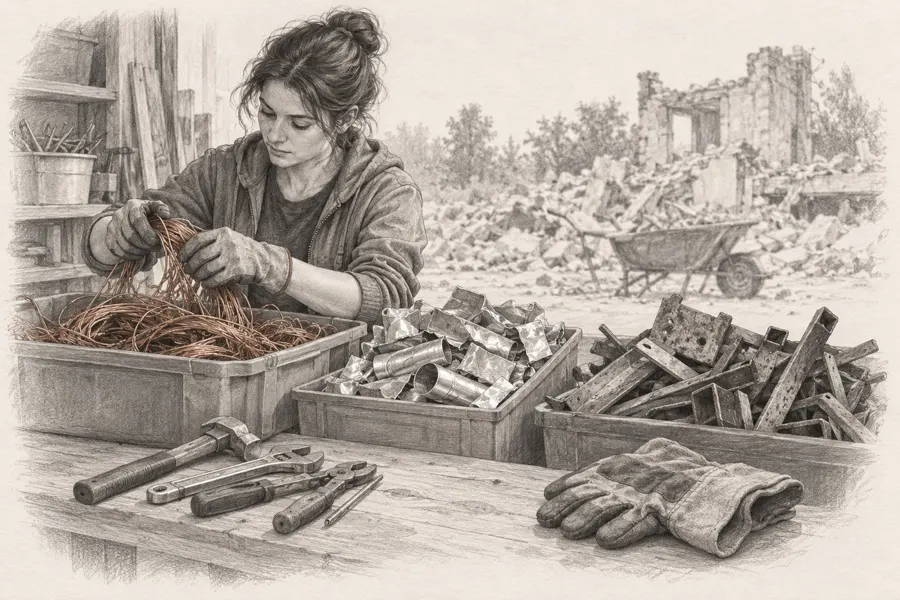
  1. 55Salvaging Metals from the RuinsThe abandoned city is the richest metal mine humanity has ever had; you only need to know what to take.
  2. 56Fuel for the ForgeWithout charcoal there is no smith: it gives the clean heat from which all tools are born.
  3. 57The Forge and the BellowsA bed of charcoal, an air pipe and a heavy anvil: the workshop from which all the other crafts begin.
  4. 58Basic ForgingSix moves — heating, drawing out, bending, splitting, punching and welding — from which almost any tool is made.
  5. 59Hardening and TemperingFire, water and patience turn a piece of soft steel into an edge that lasts for years.
  6. 60The First Tools to MakeThe chisel, the kitchen knife, the axe, nails, the hoe, horseshoes and hinges — in the order village life calls for them.
  7. 61Casting Soft MetalsTin and aluminium melt at household temperatures; it is water and poisonous fumes that do not forgive.
  8. 62Iron from Ore: the BloomeryHow our ancestors drew iron from stone with clay, charcoal and air — and why it is worth not forgetting.
  9. 63Files, Sharpening and Tool CareA sharp, well-kept tool lasts a lifetime; one left in the rain, a season.
Graphite illustration from part VIII: Electricity
Part VIII · 9 chapters · 66 pages

Electricity

Voltage, current, resistance and power, explained with water, with figures and with Ohm's law.

See the chapters
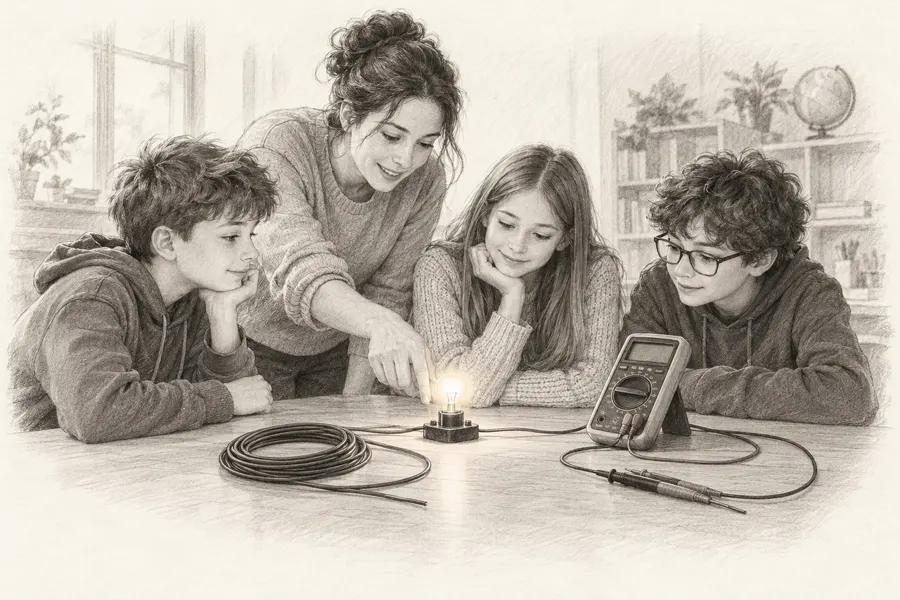
  1. 64What Electric Current IsVoltage, current, resistance and power, explained with water, with figures and with Ohm's law.
  2. 65Electrical Parts from the RuinsSolar panels, car batteries, alternators, motors, cables and LEDs: what to take, how to check it and what to leave alone.
  3. 66The Simple Battery: the Voltaic PileTwo different metals and a little salt water make current: the principle of every battery, tried with your own hands.
  4. 67The Magnet, the Coil and the DynamoCurrent makes a magnet, a moving magnet makes current: every generator rests on this.
  5. 68A 12 V System for a HousePanel, controller, battery, fuses and LEDs: how to choose them by calculation and connect them without fire.
  6. 69The Bicycle Generator and Micro-Hydro PowerCurrent from muscle and falling water: how much you can get, how to measure it and how to get it into the battery.
  7. 70Electrical SafetyAcid, hydrogen, short circuits and fire at 12 V, and a single rule for the high-voltage grid: keep away.
  8. 71The Telegraph and Morse CodeNews by wire, torch or mirror: a simple circuit and a code you learn once for life.
  9. 72The Crystal RadioA receiver without a battery, living only on the energy of the wave: aerial, coil, detector and earpiece.
Graphite illustration from part IX: Measure, Time and Direction
Part IX · 9 chapters · 65 pages

Measure, Time and Direction

How to keep the metre, the litre and the kilogram, and how to remake them from water and a pendulum if they are lost.

See the chapters
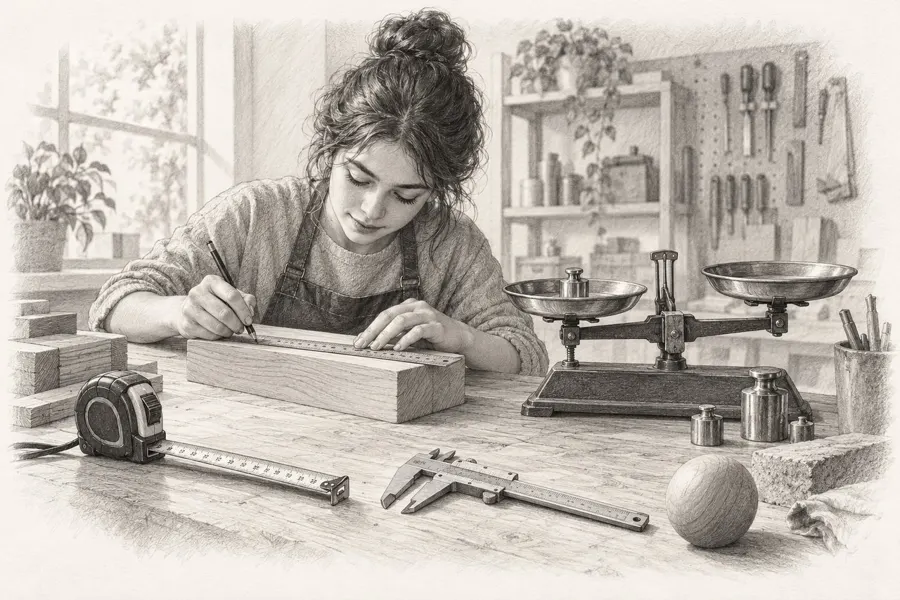
  1. 73Units of Measure and StandardsHow to keep the metre, the litre and the kilogram, and how to remake them from water and a pendulum if they are lost.
  2. 74The Calendar and the SeasonsHow to keep count of the days, read the year in a post’s shadow and work out the Paschalion yourself.
  3. 75The Sundial and the HourHow to find true noon, how to build a sundial that works, and how to keep time at night.
  4. 76Finding Your Way by Sun and StarsHow to find north by day and night, make a compass from a needle and keep your direction on the road.
  5. 77Latitude and LongitudeHow to find where you are on Earth with a wooden quarter-circle, a star, the noon sun and a good clock.
  6. 78Maps and Land SurveyingHow to measure by pace and by chain, how to draw the village map by triangulation and how to find the area of a plot.
  7. 79Levels and Water: the A-Frame, Contours, Channels, TerracesHow to find the level with three battens or a hose, and lead water over a hill without losing your soil.
  8. 80The Arithmetic You NeedFractions, percentages, the rule of three, interest and the granary sums that separate a year of plenty from a hungry winter.
  9. 81Geometry for BuildingThe right angle from a cord, areas and volumes for materials, roof pitch, the staircase and the arch.
Graphite illustration from part X: Knowledge
Part X · 9 chapters · 70 pages

Knowledge

Reading and writing can be lost in a single generation; with them all the other crafts are kept.

See the chapters
  1. 82Writing and Language: Let Us Not Lose ThemReading and writing can be lost in a single generation; with them all the other crafts are kept.
  2. 83Paper from Fibres and RagsA sheet of paper is a web of plant fibres, loosened in water and left to mat together on their own on a screen.
  3. 84Ink, Quill and SlateWith soot, oak galls, goose feathers and a board painted black, a whole village can write and learn.
  4. 85Printing: Woodcuts and Movable TypeThe principle of printing, on a village scale: what stands in relief is inked, pressed onto paper and gives the same page a hundred times over.
  5. 86The Village School: What to Teach and in What OrderA single teacher, a heated room and an hour or two a day can raise a generation that knows how to read, count and check.
  6. 87The Scientific Method: Try, Record, Compare, RepeatThe greatest shortcut of all: a way of finding out the truth that works for seeds, the kiln, animal feed and anything else.
  7. 88The Library and Copying BooksBooks die of fire, water, insects and neglect; you protect them with a dry room, watchful eyes and, above all, multiple copies.
  8. 89The Community Records: Harvests, Births, Weather, Recipes, CraftsA village's memory decays in a few years; the register lasts tens and hundreds of years and shows patterns no single mind can see.
  9. 90The Great Ideas That Must Not Be ForgottenA few ideas cost humanity thousands of years and countless lives, yet they fit in a few sentences; whoever keeps them skips centuries of mistakes.
Graphite illustration from part XI: The Community
Part XI · 9 chapters · 67 pages

The Community

How to go from a cluster of frightened people to a community that makes fair decisions and carries them through.

See the chapters
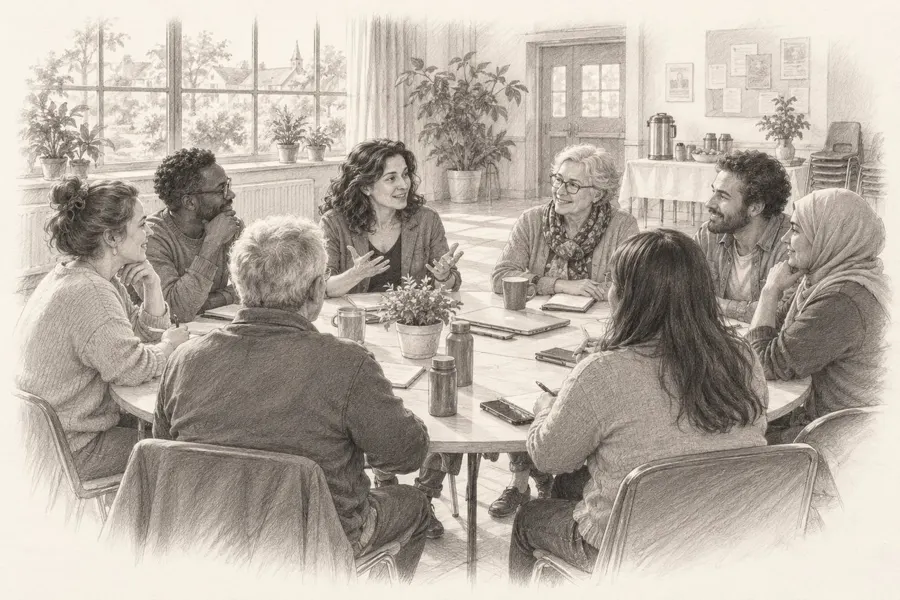
  1. 91The First Council: How You OrganiseHow to go from a cluster of frightened people to a community that makes fair decisions and carries them through.
  2. 92Division of Labour and the TradesWho does what, how to share hard work without injustice, and how not to be left without a craft when someone leaves.
  3. 93Common Food, Reserves and Fair RationsHow to count, keep and share out food so it lasts until the next harvest and no one is treated unfairly.
  4. 94Fair Judgement and ReconciliationHow to settle quarrels and wrongs without revenge, so that the community stays whole.
  5. 95Preventing Violence and Peaceful WatchHow to keep the peace in the village, put out a quarrel before it flares up, and receive strangers with care and kindness.
  6. 96Caring for the WeakChildren, the old, the sick, widows and orphans: how to keep them alive and part of the community, without leaving them to chance.
  7. 97Trade and MoneyHow to exchange work and goods fairly, with common measures, written accounts and debts that don't bury people.
  8. 98Ties with Other CommunitiesRoads, markets, messengers and agreements: how to go from a lone village to a region of villages that help each other.
  9. 99Educating Children and ApprenticeshipHow to pass on what you know, so your grandchildren don't have to rediscover everything from scratch.
Graphite illustration from part XII: Soul and Purpose
Part XII · 9 chapters · 83 pages

Soul and Purpose

Supplies keep the body alive for a few months; a purpose keeps a person whole for years.

See the chapters
  1. 100Why We RebuildSupplies keep the body alive for a few months; a purpose keeps a person whole for years.
  2. 101Faith in Times of CollapseHope is not an opinion about the future; it is the strength to take the next step.
  3. 102What Must Not Be RepeatedSome mistakes of the old world did not come by chance, but from the human heart — and that is where they can be put right.
  4. 103Work and RestSomeone who never rests breaks down, like a tool you never sharpen.
  5. 104The FamilyThe first school, the first hospital and the first shelter have always been the home.
  6. 105Joy: Song, Story, Play, FeastJoy is not a luxury for good times; it is the fuel that keeps you on your feet in bad ones.
  7. 106Death, Burial and RemembranceWe bury with care for the living and with hope for the departed.
  8. 107Memory: What We Tell Those Who Come AfterA people without memories is like someone who wakes every morning not knowing their own name.
  9. 108A Letter to Whoever Finds This BookA few words from those who wrote it, for the one who reads it.

Look inside

What the pages look like

Real pages from the book. Tap a page to see it large.

The chapter Safe Water

Free, no email needed

The first 24 pages

How to use the book, the contents, “The First 72 Hours: What to Do First” and “Safe Water: Boiling, Filtering, Sun, Chlorine”. Two chapters that could matter as soon as tomorrow. Download them, print them, pass them on.

↓ Download the sample (PDF)

Every page says

“To learn. To make. To pass on.”

And it means it. Once you buy it, you may copy it and give it to anyone, whole and unaltered: on a USB stick, in print, on a phone. The only thing nobody may do is sell it. A book like this is only good if it reaches as many people as possible.

When you buy it here, you pay for the work on it and on the editions to come.

What is not in this book

Nothing about weapons, explosives or poisons, and no surgery or dosing of strong medicines. The book is for rebuilding, not destruction; and a lost book can end up with anyone.

What you get

Two files, one book

The full editionA 831-page PDF with print-quality illustrations. For tablet, computer or printer.
The phone versionThe same text with lighter illustrations (about 26 MB). Quick to download, small on your phone.
Clickable contents and indexAll 12 parts and 108 chapters in the PDF bookmarks, plus appendices: quick reading paths, chapters A–Z, a subject index and a bibliography for all 12 parts.

The Book of Rebuilding · PDF

€9.90one-off payment · instant delivery by email · no subscription

Questions

A few things to know

What kind of book is it?

A practical, illustrated manual on how to rebuild the basics when you can no longer buy anything: safe water, food, health, materials, tools, energy, school and a community that holds together. Every chapter explains the principle, so you can improvise, not just follow steps.

What format is it in?

A 831-page PDF in English. You get two files: the full edition (for tablet, computer or printing) and a light version for phones (about 26 MB). The links arrive by email right after payment and also appear on your order page.

Is it a translation?

Yes: it is the complete English translation of “Cartea reconstrucției”, with the same illustrations, layout and page numbers.

Am I really allowed to copy it?

Yes. The book is made to travel: once you buy it, you may copy it and give it away free to anyone, whole and unaltered, on a USB stick, in print or on a phone. Only selling it or publishing altered versions is not allowed (see the terms of sale). Buying it here supports new editions and its printing.

Is this a book about weapons or aggressive “prepping”?

No. It contains nothing about weapons, explosives or poisons, and no surgery or dosing of strong medicines. It is about rebuilding: food, health, crafts, knowledge and care for people.

Can I print it?

Yes, for yourself, your family or your community. We recommend keeping it on paper or a USB stick too, not only on your phone: a book like this is most useful exactly when there is no power or internet.

How do I pay? Can I get an invoice?

By card, through Stripe (your card details never reach us). Prices are shown in euros, US dollars or Romanian lei. For a company invoice, email books@arkabooks.org after your order.

What if the file will not open?

Write to books@arkabooks.org and we will send you a good copy straight away or refund you.

“To learn. To make. To pass on.”

The Book of Rebuilding